
Quick Summary
During home inspections in Corpus Christi, I evaluate readily accessible stucco and EIFS-type exterior wall finishes for visible deficiencies, including cracking, damaged decorative trim, missing or deteriorated joints around windows and doors, limited cladding clearances, and conditions that may allow moisture intrusion.
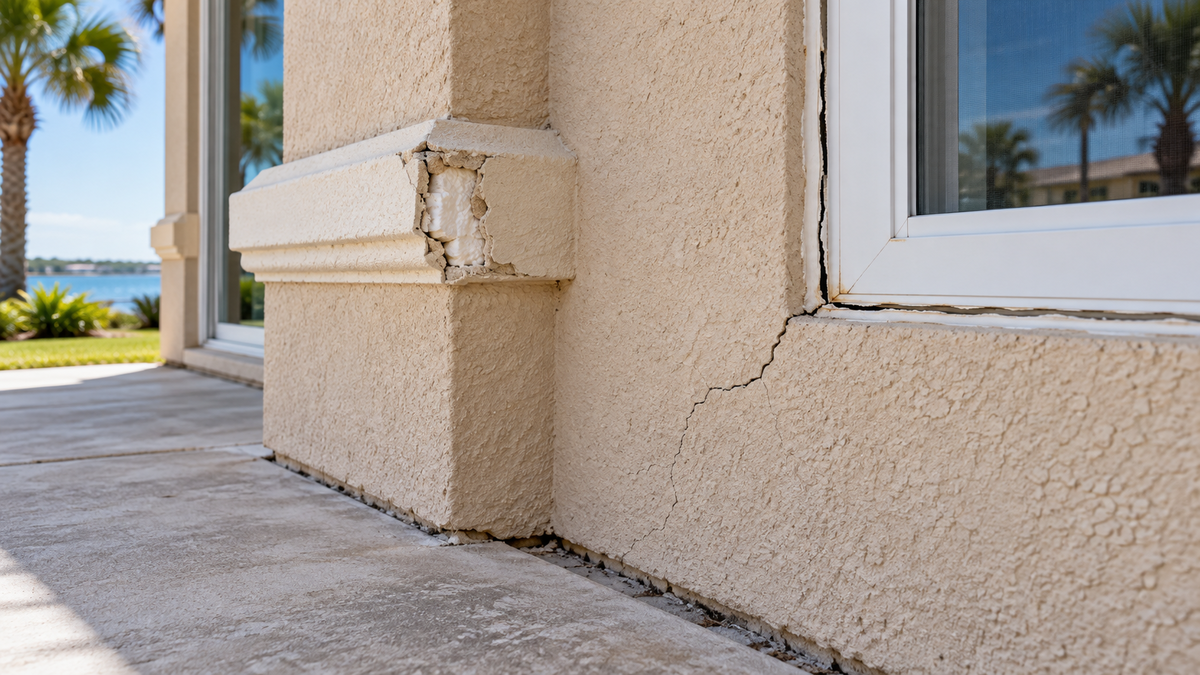
Some exterior cladding conditions I have personally documented include damaged stucco/EIFS-type decorative trim and limited clearance between exterior wall finishes and adjacent concrete surfaces. Other concerns that may be encountered include deteriorated perimeter joints, obstructed drainage details, unsealed exterior penetrations, cracking, and previous repairs.
Corpus Christi’s coastal environment exposes exterior building materials to intense sunlight, high humidity, temperature changes, and wind-driven rain. These conditions can contribute to deterioration and make proper installation, weather-resistant transitions, drainage, and maintenance particularly important.
These examples do not mean that every stucco-clad home has the same problems. Every property is different, and each inspection is based on conditions that are visible and accessible at the time of the inspection.
For more information about what I inspect, see our home inspection services in Corpus Christi.
1. Cracking in Stucco Exterior Walls
Cracking is one of the more recognizable conditions that may be observed on stucco-clad homes in Corpus Christi.
Some cracks develop from material shrinkage, temperature changes, or movement between building components. Other cracking patterns may be associated with building movement, installation deficiencies, moisture exposure, or deterioration of the exterior wall assembly.
During an inspection, I look for visible conditions such as:
- Cracks extending from the corners of windows and doors.
- Horizontal, vertical, or diagonal cracks in exterior finishes.
- Separation where stucco meets adjoining building materials.
- Cracking accompanied by visible displacement or bulging.
- Previously repaired cracks that have reopened.
Not every crack indicates a structural problem or active moisture intrusion. The location, pattern, extent, and associated conditions help determine whether additional evaluation may be appropriate.
Bulging, Delamination, and Separation of Stucco Finishes
In addition to cracking, stucco finishes may develop visible bulging, separation, or areas where the finish appears to be pulling away from adjoining materials.
These conditions may be associated with movement, moisture exposure, deterioration, or installation deficiencies. In some cases, separation may involve the bond between layers or other components of the exterior wall assembly.
A visual inspection cannot always determine whether concealed materials have deteriorated or identify the underlying cause of the observed condition.
When significant bulging, separation, or deteriorated finishes are observed, further evaluation and appropriate repairs by a qualified stucco contractor may be recommended.
Why Stucco Cracking Deserves Attention
Cracks and openings in exterior finishes may provide a pathway for moisture, depending on the construction and water-management details of the wall assembly.
When cracking is accompanied by deterioration, displacement, or evidence of moisture intrusion, additional evaluation by a qualified contractor or other appropriate professional may be recommended.
2. Missing Isolation Joints Around Windows and Doors
Missing, improperly installed, or deteriorated isolation and sealant joints around windows and doors are among the exterior cladding concerns that may be observed during home inspections in Corpus Christi.
Stucco and adjoining materials, including window and door frames, can expand, contract, and move differently as temperatures and environmental conditions change.
Depending on the exterior cladding system, appropriately designed movement joints, perimeter sealant joints, or other specified transition details may be necessary to accommodate movement and maintain the intended weather-resistant assembly.
Common visible concerns include:
- Missing movement joints: Stucco installed tightly against window or door frames without appropriate separation where required.
- Cracking around openings: Cracks or separation where stucco meets adjoining window and door frames.
- Deteriorated perimeter sealant: Missing, cracked, separated, or deteriorated sealant around exterior openings.
- Improper previous repairs: Patching or sealant applications that may conceal deficiencies or restrict intended movement.
- Moisture-related deterioration: Staining, damaged finishes, or other visible conditions around window and door openings.
In Corpus Christi, wind-driven rain and prolonged moisture exposure can increase the potential for water intrusion where exterior wall transitions, flashing, or perimeter seals are deficient.
Why Proper Window and Door Joints Matter
Properly detailed joints and transitions help accommodate movement between different materials and support the intended weather-resistant performance of the wall assembly.
When stucco is installed tightly against adjoining materials without an appropriate joint where one is required, cracking or separation may develop. Deficient perimeter sealing or flashing may also contribute to moisture intrusion.
Traditional cement-based stucco and Exterior Insulation and Finish Systems (EIFS) have different installation requirements. The absence of a visible joint alone does not establish that an installation is defective.
Missing or Improperly Detailed Stucco Control Joints
Control joints are used in certain cement-based stucco assemblies to help manage cracking associated with material shrinkage and movement.
Depending on the wall design and installation requirements, control joints may be necessary at specified locations or intervals.
When joints are improperly located, omitted where required, or restricted by previous repairs, cracking may develop in surrounding stucco finishes.
Control joints are not necessarily the same as isolation or perimeter joints used at windows, doors, and transitions between different building materials.
The appropriate number and location of control joints depend on the specific exterior wall assembly and applicable installation requirements. A standard visual home inspection may not establish every concealed installation detail.
When visible conditions suggest improper joint detailing, evaluation and appropriate correction by a qualified contractor familiar with the cladding system may be recommended.
3. Damaged Stucco and EIFS Decorative Trim
Decorative stucco and EIFS-type trim are used around windows, doors, columns, and other architectural features on many Corpus Christi homes.
Some decorative trim components incorporate foam materials covered by a protective reinforced finish. These components may become damaged from physical impact, deterioration, movement, or previous repairs.
During inspections, I look for visible conditions such as:
- Cracked or broken decorative trim.
- Exposed underlying foam materials.
- Missing or deteriorated protective coatings.
- Separation between decorative trim and adjoining surfaces.
- Previous patching or repairs showing signs of deterioration.
I have personally documented damaged decorative stucco/EIFS-type trim during home inspections in the Corpus Christi area.
When the protective exterior finish is damaged, underlying materials may become vulnerable to moisture intrusion and further deterioration.
Damaged Finishes Can Expose Underlying Materials
Not every damaged decorative component indicates concealed moisture damage. However, exposed materials, deteriorated coatings, and separation at adjoining surfaces may require repairs to restore the intended protection of the exterior assembly.
When these conditions are observed, I generally recommend evaluation and appropriate repair by a qualified stucco or EIFS contractor.
4. Limited Clearance Between Stucco and Concrete Surfaces
Another condition I have documented during home inspections involves stucco or EIFS-type exterior cladding extending close to adjacent concrete patios, walkways, or other flatwork.
Depending on the exterior wall assembly, limited clearance may interfere with drainage, expose vulnerable materials to prolonged moisture, or conceal important cladding termination details.
This is particularly important where rainwater accumulates near exterior walls or where cladding materials remain in contact with damp surfaces.
Visible concerns may include:
- Stucco or EIFS-type cladding terminating directly against concrete.
- Deterioration near the bottom of exterior walls.
- Visible water accumulation along wall and patio transitions.
- Questionable or concealed cladding termination details.
- Moisture-related staining or damage near adjoining concrete surfaces.
Missing, Covered, or Obstructed Weep Screeds
Some cement-based stucco wall assemblies incorporate weep screeds at the bottom of the exterior wall. These components provide a termination point for the stucco and allow moisture collected within the drainage assembly to escape.
During a visual home inspection, I look for observable conditions that may interfere with proper drainage, including weep screeds that appear covered by concrete, soil, landscaping, or additional exterior finishes.
When drainage openings or termination details are obstructed, moisture may accumulate within vulnerable portions of the wall assembly.
Not every stucco or EIFS system uses the same drainage or termination details. A weep screed may also be concealed by the installation configuration, making its presence difficult to determine during a visual inspection.
When visible conditions suggest a deficiency, further evaluation by a qualified contractor familiar with the specific cladding system may be recommended.
Why Proper Cladding Terminations Matter
The bottom edge of an exterior wall assembly may incorporate drainage, flashing, weep screeds, or other termination details that help manage moisture.
When these details are covered, damaged, or improperly installed, moisture may remain trapped against vulnerable materials or drainage may be restricted.
Not every stucco installation requires the same clearance. Appropriate details depend on the specific cladding system, substrate, manufacturer’s installation instructions, and applicable requirements.
When observable conditions indicate a potential deficiency, further evaluation and correction by a qualified contractor may be recommended.
5. Moisture Intrusion Around Windows, Doors, and Wall Penetrations
Windows, exterior doors, and penetrations through stucco-clad walls are important transition points within the exterior wall assembly.
Improper flashing, deteriorated perimeter sealant, damaged exterior finishes, or deficiencies at adjoining materials may increase the potential for water intrusion.
During an inspection, I look for visible conditions such as cracking, separation, deteriorated sealant, staining, damaged finishes, and evidence of previous moisture-related repairs.
Corpus Christi homes may be exposed to wind-driven rain during thunderstorms and tropical weather events. Exterior openings and transitions that are not properly detailed or maintained can become vulnerable under these conditions.
Unsealed Penetrations Through Stucco Walls
Exterior wall penetrations may include plumbing pipes, HVAC refrigerant lines, electrical conduits, vents, exterior fixtures, and other components that pass through stucco or EIFS-type finishes.
Where these penetrations are not properly detailed, openings around the components may provide a potential pathway for moisture to enter the exterior wall assembly.
During a visual inspection, I look for missing or deteriorated sealant, visible gaps, damaged finishes, and other observable conditions around accessible penetrations.
Sealant alone is not necessarily a substitute for appropriate flashing or other water-management details. The proper method depends on the type of penetration and the exterior cladding system.
When observable deficiencies are present, further evaluation and appropriate correction by a qualified contractor may be recommended.
Visible Evidence Does Not Always Reveal Concealed Damage
A stain, crack, or damaged exterior finish does not automatically establish that concealed moisture damage is present.
Likewise, the absence of visible staining does not guarantee that the materials behind the exterior cladding are free from moisture-related problems.
A standard home inspection is visual and non-invasive. I do not remove stucco, window frames, interior finishes, or other building materials to investigate concealed wall conditions.
When observable findings suggest possible concealed moisture intrusion, further evaluation by an appropriately qualified professional may be recommended.
For information about another inspection tool used to evaluate certain conditions, see our thermal imaging home inspection page.
6. Stucco Conditions at Roof and Wall Intersections
Locations where roof coverings meet stucco-clad exterior walls deserve attention because these areas depend on properly installed flashing and transition details to manage water.
Damaged or improperly installed flashing, deteriorated sealants, and openings in exterior finishes may increase the potential for moisture intrusion.
Depending on accessibility, I evaluate visible conditions such as:
- Damaged or displaced roof-to-wall flashing.
- Cracking or separation near roof and wall intersections.
- Deteriorated sealant or previous patching.
- Openings around roof-related penetrations.
- Visible staining or deterioration of exterior finishes.
These conditions are particularly relevant in the Coastal Bend, where heavy rainfall and wind-driven rain can expose deficiencies in exterior water-management details.
Flashing and Exterior Cladding Work Together
Roof flashing and exterior wall cladding are separate components, but their installation details must work together to direct water away from vulnerable parts of the structure.
When deficiencies are observed, additional evaluation or repairs may be appropriate to address the affected components and restore the intended water-management details.
For additional examples of roofing concerns, read Roof Inspection Findings in Corpus Christi Homes.
7. Previous Stucco Repairs and Patching
Previous stucco repairs may be visible through differences in surface texture, color, or finish.
Some repairs are performed as part of routine maintenance. Others may have been made to address cracking, impact damage, moisture intrusion, or other conditions.
A repaired area does not automatically indicate an active problem. However, repeated cracking, separation, deteriorated patches, or bulging may suggest that additional evaluation is needed.
During a home inspection, I document significant observable conditions without assuming that every previous repair indicates an ongoing deficiency.
Previous Repairs May Conceal Underlying Conditions
A visual inspection cannot always determine why a repair was performed, whether the original cause was corrected, or what conditions may exist beneath the finished surface.
When visible findings suggest continued movement, deterioration, or possible moisture intrusion, evaluation by a qualified contractor may be recommended.
8. Traditional Stucco Versus EIFS
Traditional cement-based stucco and Exterior Insulation and Finish Systems can look similar from the outside, but they are different exterior wall assemblies.
Traditional stucco generally consists of cement-based plaster installed over an appropriate substrate or lath system.
EIFS typically incorporates insulation board, a reinforced base coat, and a textured exterior finish. Depending on the system, additional components may provide drainage and moisture management.
Because these systems differ, their installation details, movement joints, flashing requirements, termination details, and repair methods may also differ.
Why Identifying the Cladding System Matters
It is important not to assume that every stucco-like finish is traditional cement stucco or that every system follows the same installation requirements.
During a standard visual home inspection, the exact exterior wall assembly may not always be identifiable without documentation or further investigation.
When specialized evaluation or repairs are needed, a contractor familiar with the particular cladding system should determine the appropriate methods and materials.
Fiber Cement Siding as Another Exterior Cladding Material
Fiber cement siding is another exterior cladding material used on residential homes throughout Corpus Christi and the Coastal Bend.
Unlike traditional cement-based stucco and EIFS, fiber cement siding is commonly installed as individual lap boards or panels. Its installation requirements involve specific details for board joints, clearances, flashing, fastening, and moisture management.
These differences are important because installation methods and drainage details appropriate for one exterior cladding system may not be suitable for another.
For additional information about fiber cement siding problems, improper installation, moisture-related deterioration, and flashing concerns, read our Common Fiber Cement Siding Inspection Findings in Corpus Christi Homes article.
9. Stucco Concerns in New Construction Homes
New construction homes can have exterior cladding deficiencies even when the finishes appear attractive and recently installed.
Potential concerns may include incomplete finishing work, damaged materials, questionable transitions around windows and doors, improper clearances, or visible deficiencies in flashing and sealant details.
A newly constructed home should not automatically be assumed to be free from defects simply because the exterior finishes are new.
Why an Independent New Construction Inspection Can Help
During a new construction home inspection, I evaluate readily accessible systems and components for observable conditions within the applicable inspection scope.
Documenting visible deficiencies before closing or during an applicable builder warranty period may provide useful information when communicating concerns to the builder.
Learn more about our new construction home inspections in Corpus Christi.
If you already own a newly constructed home, an 11th-month warranty home inspection may help document observable conditions before an applicable builder warranty expires.
10. How Is Stucco Evaluated During a Corpus Christi Home Inspection?
A Texas real estate inspection is a limited visual survey and basic performance evaluation of applicable systems and components using normal controls, as defined by the Texas Real Estate Commission Standards of Practice.
During a residential home inspection, I evaluate readily accessible exterior wall components for applicable deficiencies involving exterior cladding, water-resistant materials, flashing, openings, and observable evidence of water penetration.
When evaluating stucco or EIFS-type exterior finishes, I document visible deficiencies that fall within the applicable inspection scope.
A standard home inspection is not the same as a specialized stucco or EIFS moisture-intrusion assessment.
I do not remove exterior finishes, open concealed wall assemblies, perform destructive testing, or determine every concealed condition behind the cladding.
When Is Further Evaluation Recommended?
When observable conditions suggest possible concealed damage, improper installation, significant deterioration, or deficiencies requiring specialized knowledge, I may recommend further evaluation by an appropriately qualified professional.
For more information about our inspection process, see Home Inspection Services in Corpus Christi.
Documenting Stucco Inspection Findings in Corpus Christi
When I observe an exterior cladding deficiency, my goal is to document the condition clearly so the client understands what was visible and where it was located.
Corpus Christi Home Inspections uses digital HomeGauge inspection reports with photographs to help explain significant findings and the observable condition of the property at the time of the inspection.
Depending on the finding, the report may include a description of the condition, its location, and a recommendation for repair or further evaluation by an appropriately qualified professional.
Reports are typically delivered within 24 hours.
Learn more about your home inspection report.
Frequently Asked Questions About Stucco Inspections
Are stucco cracks common in Corpus Christi homes?
Cracking is a condition that may be observed on stucco-clad homes in Corpus Christi. Material shrinkage, temperature changes, building movement, moisture exposure, and installation conditions can contribute to cracking. The significance depends on the location, pattern, extent, and associated conditions.
Should stucco have isolation joints around windows and doors?
Appropriate movement or perimeter joints may be necessary depending on the exterior cladding system and applicable installation details. Stucco installed tightly against adjoining frames without an appropriate transition may develop cracking or separation. The absence of a visible joint alone does not establish a deficiency.
What is the purpose of a stucco control joint?
Control joints help manage cracking associated with movement and shrinkage in certain cement-based stucco assemblies. Their location and spacing depend on the wall design and applicable installation requirements.
What happens when a stucco weep screed is covered?
Where a wall assembly incorporates a weep screed, covering or obstructing its drainage openings may interfere with the intended movement of moisture out of the assembly. Further evaluation may be appropriate when a visible drainage deficiency is observed.
Can water enter through unsealed stucco penetrations?
Yes. Openings around exterior pipes, conduits, vents, and other penetrations can provide pathways for moisture when the required water-resistant details are deficient. Appropriate sealing, flashing, or other transition details depend on the type of penetration and cladding system.
Can water get behind stucco?
Yes. Water can enter an exterior wall assembly through damaged finishes, deficient flashing, deteriorated sealant, or other vulnerable transitions. Properly designed wall assemblies incorporate methods to manage moisture. A visual inspection cannot identify every concealed moisture condition.
Is damaged EIFS decorative trim a concern?
Damage to the protective finish can expose underlying materials and increase vulnerability to moisture intrusion or deterioration. Damaged areas should be evaluated and repaired using appropriate materials and methods for the particular cladding system.
Should stucco touch concrete patios or walkways?
The appropriate clearance depends on the specific stucco or EIFS assembly and its installation requirements. Direct contact or limited clearance may be a concern when it interferes with drainage, conceals termination details, or exposes vulnerable materials to prolonged moisture.
Can a home inspector identify moisture behind stucco?
A standard home inspection may identify visible indications of moisture intrusion, but concealed damage cannot always be determined through a visual, non-invasive inspection. Specialized evaluation may be necessary when observable conditions suggest a concealed problem.
Are stucco inspections included in a standard home inspection?
Visible exterior wall cladding conditions are evaluated within the applicable Texas Real Estate Commission Standards of Practice. A standard home inspection is not a specialized invasive stucco or EIFS moisture investigation.
Can a newly constructed home have stucco deficiencies?
Yes. New construction homes may have damaged finishes, incomplete installation details, deficiencies around exterior openings, or other observable conditions. An independent inspection can help document visible concerns before closing or during an applicable builder warranty period.
Learn more about new construction home inspections in Corpus Christi.
About Your Corpus Christi Home Inspector
I am Gerald Herrmann, founder and lead inspector of Corpus Christi Home Inspections. I am a Certified Master Inspector, an InterNACHI member, and Texas TREC Professional Real Estate Inspector #22839.
I provide residential home inspections for buyers, sellers, homeowners, and new construction homebuyers throughout Corpus Christi, Padre Island, Calallen, Flour Bluff, Portland, Port Aransas, Robstown, Chapman Ranch, and surrounding Coastal Bend communities.
My approach is straightforward: inspect the readily accessible systems and components carefully, document what I find, and provide a detailed report that helps my clients better understand the property.
Exterior cladding conditions, including visible stucco and EIFS-type deficiencies, are among the components evaluated during a residential home inspection.
Request a Home Inspection in Corpus Christi
If you are buying, selling, building, or maintaining a home in Corpus Christi or a surrounding Coastal Bend community, I can help you better understand the property’s observable condition at the time of the inspection.
During the inspection, I evaluate readily accessible exterior wall components, including stucco and other cladding materials, along with the applicable structural, electrical, HVAC, plumbing, and other systems and components.
Inspections are performed by me, Gerald Herrmann, Certified Master Inspector and Texas TREC Professional Real Estate Inspector #22839.