
Updated
Quick Summary
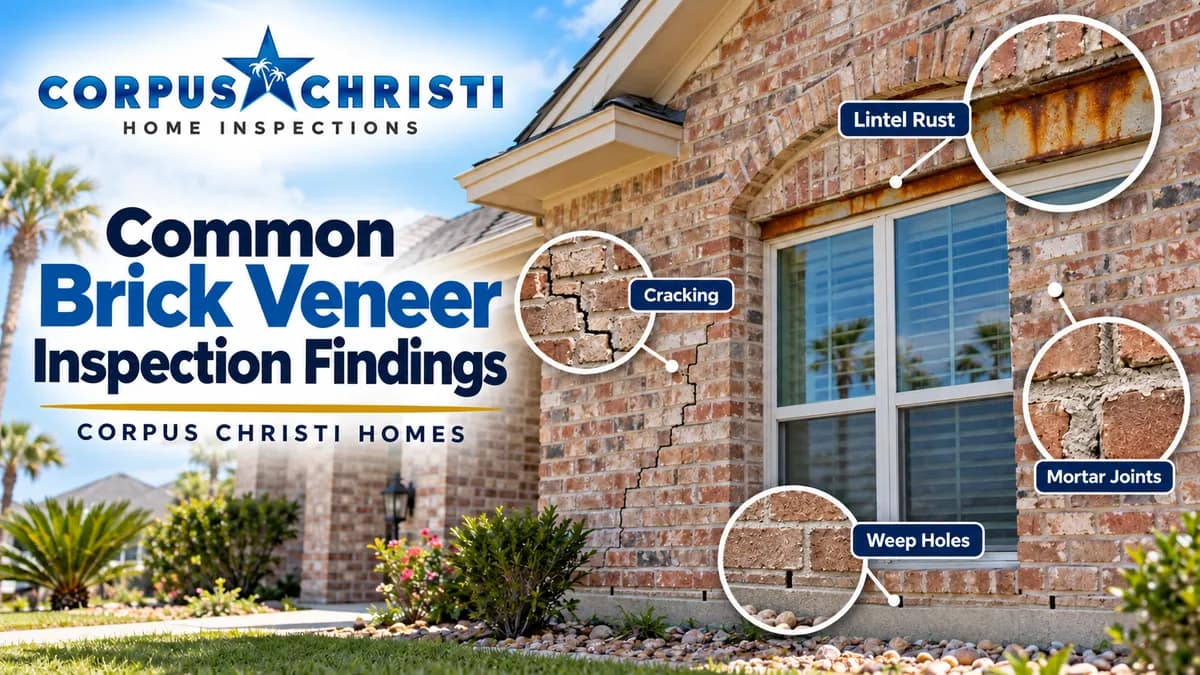
Brick veneer concerns include cracking, wall displacement, deteriorated mortar, restricted drainage, corroded lintels, and damaged flashing. I evaluate accessible masonry and adjoining components during Corpus Christi home inspections.
A crack, rust stain, or material inside a weep opening does not alone establish structural failure or concealed damage. Its location, severity, and associated conditions determine the appropriate next step.
| Finding | Recommended next step |
|---|---|
| Cracking with displacement or other movement | Seek masonry or structural evaluation rather than relying on cosmetic patching. |
| Covered or restricted weep openings | Have a masonry contractor assess the intended drainage path; do not seal designed weeps. |
| Deteriorated mortar or damaged bricks | Use compatible repair materials selected for the existing masonry. |
| Corroded lintels with distortion or cracking | Have a qualified contractor or structural professional evaluate the support. |
| Separated or deteriorated movement-joint sealant | Repair the joint with a compatible system that preserves movement. |
| Flashing or wall-penetration concerns | Evaluate water-management details and the cause of moisture evidence. |
Learn more about our home inspection services in Corpus Christi.
Understanding Brick Veneer Construction
Many “brick homes” have a non-load-bearing brick veneer over a separate structural wall. The veneer is supported at its base or other designed locations and connected to the backing with masonry ties.
Brick and mortar can admit moisture. In a drained veneer assembly, the water-resistive layer, cavity, flashing, and weep openings work together to direct it out. Details differ for load-bearing masonry, adhered thin brick, and other systems; the exterior finish alone does not identify the complete wall construction.
The Brick Industry Association Technical Notes provide additional construction and moisture-management guidance.
1. Cracking in Brick Veneer and Mortar Joints
Cracking is one of the most recognizable conditions that may be observed in brick veneer exterior walls. Cracks may develop because of material movement, temperature changes, moisture-related expansion, differential settlement, improper installation, or movement of supporting building components. During a visual inspection, I look for conditions such as:- Stair-step cracks following mortar joints.
- Vertical or horizontal cracks through brick or mortar.
- Diagonal cracking near windows and doors.
- Cracking at corners and changes in wall configuration.
- Separation between brick veneer and adjoining materials.
- Previously repaired cracks that have reopened.
- Cracking accompanied by visible displacement or rotation.
Actual Inspection Photograph: Vertical Brick Veneer Cracking

Actual Inspection Photograph: Stair-Step Cracking

Do Stair-Step Cracks Mean Foundation Problems?
Not necessarily. Stair-step cracking can occur for several reasons, and its presence alone does not establish that the foundation has failed. The location, direction, extent, width, displacement, and associated conditions help determine the significance of a cracking pattern. Cracking accompanied by masonry displacement, rotating veneer, door or window misalignment, interior wall cracking, or other indications of movement may warrant further evaluation. During a Texas home inspection, observable masonry conditions may be considered along with other readily visible indications when evaluating foundation performance. A standard home inspection does not determine the precise cause of every masonry crack or replace a structural engineering evaluation.2. Bulging, Separation, or Displacement of Brick Veneer
Brick veneer should remain properly supported and connected to the underlying wall assembly. Visible bulging, outward movement, separation, leaning, or rotation may indicate a condition requiring additional evaluation. Potential contributing factors can include movement of supporting components, deficiencies in veneer support, deterioration of masonry connections, or other structural and installation conditions. Observable concerns may include:- Brick walls that appear to bow or bulge outward.
- Separation where veneer meets window or door frames.
- Gaps between masonry and adjacent building components.
- Displaced masonry near corners or wall openings.
- Cracking associated with noticeable wall movement.
- Loose or visibly unstable masonry components.
Why Veneer Movement Deserves Attention
Significant movement may affect the stability of the veneer or the performance of exterior wall transitions. However, a visual inspection does not necessarily reveal the condition, spacing, or installation of concealed masonry ties or other supporting components. When movement or instability is apparent, evaluation by an appropriately qualified masonry contractor or structural engineer may be recommended.3. Missing, Covered, or Obstructed Brick Veneer Weep Holes
Weep openings are an important part of the moisture-management system in many anchored brick veneer wall assemblies. They allow water collected at appropriate flashing locations to drain toward the exterior and may also provide some ventilation of the drainage space, depending on their design. Weep openings may appear as open vertical mortar joints, manufactured weep vents, tubes, or other designed drainage components.Where Should Brick Veneer Weep Holes Be Located?
In conventional drained brick veneer construction, weeps are generally associated with flashing locations, including the base of walls and certain interruptions in the drainage cavity, such as above applicable windows, doors, or other horizontal transitions. The appropriate locations and configurations depend on the construction details, wall assembly, and applicable requirements.Actual Inspection Photograph: No Visible Weep Holes Above Window Lintels

Common Brick Veneer Problems at Weep Openings
- Drainage openings covered by soil or landscaping.
- Openings concealed by adjacent concrete or later alterations.
- Visible mortar or debris restricting an intended opening.
- Caulk or sealant applied across designed drainage openings.
- Missing apparent drainage provisions at an accessible location where they may be required.
- Staining or deterioration near questionable drainage details.
Does Mortar Inside a Weep Hole Always Mean It Is Blocked?
No. Some mortar may be visible within or behind a weep opening without necessarily preventing water from draining through the intended path. The important question is whether the designed drainage route is obstructed or otherwise deficient. A visual inspection generally cannot determine the complete condition of concealed drainage cavities or establish whether water can move freely through every portion of the wall assembly.Actual Inspection Photograph: Material Inside a Weep Opening

4. Brick Veneer Flashing and Moisture Management
Flashing is used at appropriate locations to collect and redirect moisture from the drainage space behind brick veneer toward the exterior. Important transitions may occur at the base of walls, around windows and doors, over supporting angles, and at roof-to-wall intersections. Deficiencies in these details may allow moisture to accumulate within vulnerable portions of an exterior wall assembly.Visible Flashing and Drainage Concerns
- Exposed flashing that appears damaged or displaced.
- Questionable flashing terminations at wall transitions.
- Visible gaps or deterioration around exterior openings.
- Drainage openings that appear covered or restricted.
- Water staining at window heads or wall intersections.
- Previous repairs that may conceal original drainage details.
5. Deteriorated, Cracked, or Missing Mortar Joints
Mortar joints help bond masonry units together and contribute to the weather resistance and performance of a brick wall. Over time, mortar may deteriorate because of weather exposure, moisture, material movement, improper repairs, or other conditions. During an exterior inspection, I look for:- Cracked or separated mortar joints.
- Loose, deteriorated, or missing mortar.
- Open joints at corners and wall intersections.
- Unusual gaps between individual bricks.
- Previous mortar repairs showing continued deterioration.
- Areas with visible moisture-related damage.
When Is Mortar Repair Appropriate?
Significantly deteriorated mortar can allow additional moisture exposure and may affect the performance of the masonry assembly. Repointing, sometimes called tuckpointing, may be an appropriate repair in certain situations. However, the correct mortar composition and repair method depend on the existing masonry materials and condition. A repair contractor should select materials that are compatible with the brick and existing mortar. Not every hairline mortar crack requires the same repair approach. The extent and significance of the observed condition should be considered.6. Brick Veneer at Soil, Landscaping, and Concrete Surfaces
The relationship between exterior brick veneer, adjacent soil, landscaping, patios, walkways, and other surfaces is important for drainage and moisture management. When landscaping or concrete is installed above the intended drainage or flashing level, important wall details may become concealed or obstructed. Observable concerns can include:- Soil or mulch covering apparent drainage openings.
- Concrete patios installed against intended drainage locations.
- Water accumulation near exterior masonry walls.
- Moisture staining or deterioration near the wall base.
- Changes in grade that conceal original wall terminations.
- Landscaping that restricts access to visible drainage details.
Should Brick Veneer Touch Concrete?
The answer depends on the design and installation of the wall assembly. Brick veneer is often supported by masonry or concrete foundation components, and contact with certain support surfaces is an intended part of the construction. The important distinction is whether added concrete, soil, or other materials conceal flashing, obstruct weep openings, or interfere with the intended moisture-management system. A standard visual inspection may not establish every concealed termination or flashing detail.7. Rusting Steel Lintels Above Windows and Doors
Some brick veneer installations use steel lintels or supporting angles above windows, doors, and other wall openings. These components support portions of the masonry above the opening. When steel is exposed to moisture or its protective finish deteriorates, corrosion may develop. Depending on the extent and configuration, corrosion may contribute to expansion, cracking, displacement, or deterioration of adjacent masonry.Visible Lintel Concerns
- Rust staining below or around steel lintels.
- Corroded or deteriorated exposed steel surfaces.
- Cracking in masonry above window or door openings.
- Displaced or separated brick near supporting angles.
- Visible deterioration of protective coatings.
- Signs of previous repairs around lintel locations.
8. Missing or Deteriorated Brick Veneer Movement Joints
Brick masonry expands and contracts in response to environmental conditions and material changes. Appropriately designed movement joints help accommodate these movements. In fired clay brick masonry, these are commonly called expansion joints. Their placement depends on wall dimensions, openings, corners, structural transitions, support details, and the overall building design.Potential Movement Joint Concerns
- Cracking near changes in wall configuration.
- Distress where long masonry walls meet corners or returns.
- Hardened, deteriorated, or separated joint sealant.
- Previous repairs that restrict an intended movement joint.
- Visible separation around windows or other rigid components.
9. Damaged Bricks, Spalling, and Moisture-Related Staining
Individual bricks may show visible damage or deterioration from impact, moisture exposure, material defects, previous repairs, or other environmental conditions. Spalling generally refers to deterioration involving pieces or portions of a masonry surface breaking or separating. During an inspection, I look for conditions such as:- Cracked or broken bricks.
- Chipped or deteriorated masonry surfaces.
- Loose masonry fragments.
- Unusual staining near openings and wall transitions.
- White mineral deposits on masonry surfaces.
- Evidence of previous patching or replacement.
What Is Efflorescence on Brick?
Efflorescence is a whitish mineral or salt deposit that can develop when moisture moves through masonry materials and leaves soluble salts behind as the water evaporates. Efflorescence alone does not prove that significant concealed water damage is present. However, extensive or recurring deposits, especially when accompanied by deterioration or interior moisture evidence, may justify further evaluation of moisture sources and drainage conditions.Why Coastal Conditions Matter
Humidity, wind-driven rain, airborne salts, and prolonged exposure to moisture can influence the condition of masonry, mortar, and associated metal components. The severity and cause of deterioration depend on the materials, construction details, exposure, and maintenance history.10. Brick Veneer at Roof Intersections and Wall Penetrations
Roof-to-wall intersections, exterior penetrations, windows, and doors are important locations within a brick veneer wall assembly. These areas depend on appropriate flashing, sealants, drainage, and transitions between different building materials. Potential concerns include:- Damaged or displaced roof-to-wall flashing.
- Questionable termination details where roofing meets brick.
- Deteriorated sealant around exterior penetrations.
- Gaps around pipes, conduits, vents, or fixtures.
- Cracking or separation around windows and doors.
- Visible evidence of water penetration near wall transitions.
Why Roofing and Brick Veneer Must Work Together
Roofing and exterior masonry are separate systems, but their water-management details must work together to direct water away from vulnerable parts of the structure. An apparent deficiency at a roof-to-wall intersection may involve roofing flashing, masonry detailing, or concealed components that cannot be fully evaluated during a standard visual inspection. For more information about roofing deficiencies, see our article on Roof Inspection Findings in Corpus Christi Homes.11. Previous Brick Veneer Repairs and Alterations
Previous masonry repairs are not automatically evidence of a current defect. Some repairs are performed for routine maintenance, while others may address cracking, deterioration, movement, moisture intrusion, or impact damage. Signs of previous work may include:- Mortar joints with different color or texture.
- Replaced bricks that differ from surrounding masonry.
- Patched cracks or repaired openings.
- Sealant applied over mortar joints.
- Coatings applied to portions of brick veneer.
- Altered drainage openings or wall penetrations.
Previous Repairs May Conceal Underlying Conditions
A visual inspection cannot always determine why a repair was performed, whether the original cause was corrected, or what conditions remain behind the finished surface. When repaired areas show continued cracking, displacement, deterioration, or moisture-related conditions, further evaluation may be appropriate. Repair materials and methods should be suitable for the specific masonry assembly.12. Brick Veneer Inspection Findings in New Construction Homes
Brick veneer problems can occur in new construction homes, even when the masonry appears attractive and recently completed. Potential concerns may include damaged bricks, incomplete mortar work, questionable drainage openings, visible flashing deficiencies, movement-related cracking, and incomplete transitions around exterior openings. The age of a home does not automatically establish whether the exterior wall assembly was correctly installed.Why an Independent New Construction Inspection Helps
A final new construction home inspection provides an opportunity to document readily visible deficiencies before closing. However, a completed home inspection does not verify every concealed component or replace construction-stage inspection of masonry ties, wall flashing, weather-resistant barriers, or other hidden installation details. Learn more about our final new construction home inspections in Corpus Christi. For homeowners approaching the end of an applicable builder warranty period, an 11th-month warranty home inspection may help identify and document observable conditions that warrant attention.How Is Brick Veneer Evaluated During a Texas Home Inspection?
A Texas home inspection is a limited visual survey and basic performance evaluation within the applicable Texas Real Estate Commission Standards of Practice. I evaluate accessible cladding, visible flashing details, water-penetration evidence, and masonry movement alongside other observable conditions.
I do not remove veneer, open walls, excavate foundations, or perform a structural engineering investigation. The inspection cannot establish every concealed tie, flashing or drainage detail, the exact cause of every crack, or the extent of hidden deterioration.
Significant movement, instability, support concerns, or evidence suggesting concealed moisture damage may require evaluation by a qualified masonry contractor, structural engineer, or other appropriate specialist.
Documenting Brick Veneer Inspection Findings
Your digital HomeGauge report describes significant findings, their locations, photographs when appropriate, and recommended repairs or further evaluation. Reports are delivered within 24 hours after the inspection. Learn more about your home inspection report.
Frequently Asked Questions About Brick Veneer Inspections
Are cracks in brick veneer always a structural problem?
What causes stair-step cracks in brick walls?
Do brick veneer walls need weep holes?
Are brick weep holes supposed to be open?
Does mortar inside a brick weep hole mean it is defective?
Can rainwater get behind brick veneer?
What does white staining on brick mean?
Is rust on a steel lintel above a window a concern?
Should brick veneer have expansion joints?
Does a brick home mean the exterior walls are structural brick?
Can a new home have brick veneer deficiencies?
Are brick veneer walls inspected during a Texas home inspection?
About the Author
I am Gerald Herrmann, owner of Corpus Christi Home Inspections, a Certified Master Inspector and Texas TREC Professional Real Estate Inspector #22839. I personally inspect homes in Corpus Christi and the Coastal Bend and document observable conditions in digital HomeGauge reports.


